
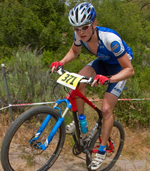
May the Force Be With You
Commonly referred to as strength training on the bike, high force/low cadence resistance training can potentially improve the force component of one's pedal stroke (torque), particularly in higher torque situations, such as on steep, seated climbs or in mountain bike racing where the climbing gradient can vary. However, force work can place high demands on muscles and joints, and should be well-considered before implementing it into one's training. We'll look at a few ways that we have found force/resistance training to be effective.
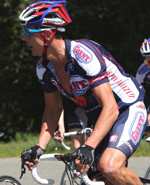
Meet Long-time Whole Athlete Coach, John Hunt
Anybody who has been around the Northern California road racing scene for more than a season knows of John Hunt. From multiple district elite titles to time spent racing for the budding Health Net professional team to recent top 20’s in NRC races where many of his competitiors are twenty years younger, John has a wealth of experience matched by few. We asked him to take time out from training and stopping by the Java Hut to share just a bit of his knowledge.
Summer Massage Specials Not to Miss!
Massage therapist extraordinaire, Andrea Smith is offering some great deals on massage. For new clients, $60 for a 90-minute massage or only $40 for 60 minutes. If you refer three people who book massages, you receive a free 60-minute massage. Package specials available too...

Product Spotlight: Elemental Herbs - Herbal Cool & Sunscreen
At Whole Athlete we are dedicated to finding organic and sustainable products whenever possible. We had a chance to try Elemental Herbs’ Herbal Cool and Sunscreen and they met our high standards, providing relief for sore muscles and strains and protection from the sun’s harmful rays – two arenas well-known to endurance athletes.
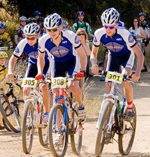
Whole Athlete Junior Team on a MTB National XC Championship Quest
The 2009 Mountain Bike Cross Country National Championships will be held at the Sol Vista Resort in Colorado, over 8000 feet above sea level. Whole Athlete juniors-espoirs will not only be battling other riders, they'll be fighting the performance advantages of their competitors who live and train year-round at high altitude. You know the Colorado natives are licking their chops at this prime opportunity to better their coastal counterparts - so how do we attempt to level the playing field? We take the Team to Tahoe!
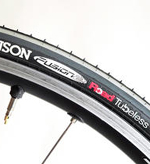
Product Spotlight: Road Tubeless Tires
Two factors have placed the favor on tubular tires over the more common clincher and inner tube combination – resistance to pinch flats and ride quality. But the advent of road tubeless setups like Shimano’s Dura Ace 7850SL wheel with Hutchinson Fusion 2 tires has bridged the gap. Not having to worry about pinch flats (those “snakebite” flats caused by a rock or raised crack pinching the inner tube between the rim and tire) means being able to run lower tire pressures, around 90psi for a 150lb rider. In turn, this improves ride quality by doing a better job of soaking up bumps in the road and increasing grip when cornering. Whole Athlete coaches Dario Fredrick and John Hunt, two active racers with decades of experience on both tubular and traditional clincher wheels, are big fans of the 7850SL + Fusion 2 combination. You can find out why for less - through July 31 we’re offering a 10% discount off MSRP.
Mental training: Moving Forward by Letting Go
So often we increase our performance and enjoyment on the bike by taking action: training a limiter, improving a skill, taming the mind. But sometimes, it’s better to give in than to dig in. The mentally fit cyclist knows when letting go – rather than pushing harder, doing more, or hanging on – is the best way forward.
Top-10 Whole Athlete Results
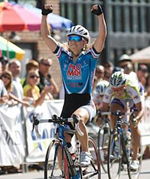
From professionals like Shelley Olds, who recently seems to get on the podium every time she pins a number on, to juniors like Alec Kassin who just won his first criterium, to Masters athletes like Ralph Pilley who won his division at the Sea Otter Classic XC, Whole Athletes have been tearing up race courses around the state and around the country. Check out some of our recent results - this is by no means complete and apologies to anyone we missed!
Holistic Performance Newsletter - Vol. 15, Summer 2009
By Dario Fredrick, John Hunt & Peter Nicholson
Commonly referred to as strength training on the bike, high force/low cadence resistance training can potentially improve the force component of one's pedal stroke (torque), particularly in higher torque situations, such as on steep, seated climbs or in mountain bike racing where the climbing gradient can vary. However, force work can place high demands on muscles and joints, and should be well-considered before implementing it into one's training. We'll look at a few ways that we have found force/resistance training to be effective.
In endurance sports the term "strength" is often confused with force. Exercise physiology defines strength as a single maximal muscular effort whereas in cycling, muscular endurance is the ability to contract muscles repeatedly over time. At a given power output, pedaling torque varies with cadence, but the actual force is surprisingly low compared to that of a true strength effort such as in weight lifting.
How should you use force work to improve your cycling? In our experience one three-week cycle with a single force workout each week works best, with efforts in the 4-6 min. duration range (power has to drop too much if you are doing longer efforts at low cadence) on a medium gradient hill at ~50-60 rpm. Force work should come after a good cycle of zone 3 muscular endurance training (~90% of Maximal Steady State heart rate) and be done in the zone 3/4 range, which makes it a relatively high intensity workout. Particular attention should be paid to maintaining good form (smooth pedal stroke, no pulling on the bars) when riding at these very low cadences.
Force workouts can be a useful addition for people who have to train indoors, and work well when alternating them with high cadence intervals. They can add variety to late base/ early build training phases - if people are getting antsy, as it lets them "go hard" in a very controlled way. We also find force workouts useful preparation for cyclocross and MTB races, both of which feature terrain that occasionally requires riders to utilize a very low cadence. However, they can create a deep level of muscular fatigue, so we wouldn't prescribe them for somebody who's going to race on the following weekend. Force training also tends to work best for athletes training with power. If the athlete is using HR, we recommend that they use perceived effort as a gauge of intensity, since very low cadence suppresses HR response to a given workload.
While force training has its place, most developing cyclists really need to improve their ability to turn over a lower gear at a higher cadence when climbing, and raise their muscular endurance and efficiency. We know that the most efficient cadence when climbing ranges from ~70-90 rpm, depending on the power output and the person, and as power increases, optimal cadence increases within that range. The type of rider who can benefit from force work should already be able to turn at least 75-85 rpm uphill.
Force training is very difficult to achieve and hard on the body, both muscularly and with regard to joint torque at the knees. We don't recommend it for anyone who has, or has had knee problems, and for those with low back vulnerability they need to be very careful. Furthermore, the athlete must already have a moderate to high power to weight ratio (>4 W / kg at Maximal Steady State, ~30min TT power) and a high level of fitness to benefit from this type of workout, otherwise it is an excessive stimulus that breaks down muscle, and reduces turnover and suppleness of pedaling. If athletes are power to weight challenged (and don't ride a compact or triple crankset) they are already doing high-resistance efforts every time they go uphill. Force training has its place for some, but tends to be over-utilized by coaches who think it's a cure-all in terms of building climbing or TT power. We tend to be conservative in prescribing force training, and do so for only a handful of athletes. Talk with your coach to see if force training might be right for you.
Meet Long-time Whole Athlete Coach, John Hunt
When did you start racing?
I did one race in 1990 in Napa, same weekend as Cherry Pie. I was 2nd and I remember Dario raced it as well. We were Cat 4's- there were no 5's back then. I did a few more in 1991 and upgraded to a Cat2, then wallowed in Cat2 land for several years only doing select local races that I liked. I got more serious in 1996 and upgraded to a Cat1- by 1997 it was all I wanted to do. Too bad I was already 33 years old.
When did you start coaching?
I started coaching in about 2002- Jason Williams was my first wholeathlete client. We still talk/e-mail to this day.
What do you like best about coaching?
I like the interaction and particularly like helping people with concrete goals.
As you've matured, how have you adapted your training?
I have to do less for sure. And more recovery after hard days. If I tried to do what was appropriate 5 years ago, it would smash me. That is one of the things that I love about training/coaching. You have to keep changing to keep up with how your body changes. It is a challenge to open new doors every year in terms of finding fitness.
What do you think is your biggest challenge as an 'older' racer?
As I said previously- I cannot stand up to all the training that I used to do (and still benefit from it) Also, there are many more quality young racers than there used to be. The young kids are good! This is true even at a local level. There used to be maybe five dominant guys in the area. Now there are more like twenty-five- I might not even be one of them unless I am on my best day.
What do you think is your biggest advantage as an 'older' racer?
Experience and perspective. I have done almost every race on the calendar multiple times. I pretty much know how every race will go down. Lately, I have been focusing on being positive and having fun. More racers need to focus on this. When you allow negative thoughts to take over (when racing or training)- you might as well go home. You have to finish a race to win.
I also have learned that racing is more about managing the legs/fitness that you have, not the legs/fitness that you want. It is rare that you have the kind of day that you don't even feel your legs- trick is to get as much as you can out of yourself on all the other days! And have fun doing it!
How have you seen racing in Northern California change in the past ten years?
As I alluded to- quality of riders has gone up a lot. I this is the boom from when people started training/racing a few years ago because they were inspired by Lance Armstrong. The ones that stuck with it are starting to bear fruit. More good riders and more good teams. Too bad the events have really not kept pace. Also, more participation on all levels - Masters 45+ 4/5 sells out!
What is your role with Cal Giant?
I wear many hats- none of them official. I am a rider, I coach a few of the riders, talent scout, occasionally DS (in the car or on the sidelines), sometimes I call the races out on the road, sometimes I fetch bottles and take clothing back to the team car. With a small program you have to do many things.
Summer Massage Specials Not to Miss!
Massage therapist extraordinaire, Andrea Smith is offering some great deals on massage. For new clients, $60 for a 90-minute massage or only $40 for 60 minutes. If you refer three people who book massages, you receive a free 60-minute massage.
Package Specials: FIVE 60 min - $295 (SAVE $30), FIVE 90 min - $425 (SAVE $50), TEN 60 min - $575 (SAVE $75), TEN 90 min - $850 (SAVE $100). You can use these packages for yourself, share them or even purchase gift certificates.
Andrea Smith, CMT is a graduate of the Institute of Conscious Bodywork. She is trained in Swedish, Deep Tissue, Sports, Myofacial, Acupressure, Reflexology and Pregnancy massage techniques, perfecting these skills in her private practice. Andrea intuitively uses this eclectic mix of modalities to promote corrective and healing changes within the body. She is well-versed in working with endurnace athletes. For appointments contact Andrea at (415) 259-7803 or andreamassage@gmail.com.
Product Spotlight: Elemental Herbs Herbal Cool and Sunscreen
At Whole Athlete we are dedicated to finding organic and sustainable products whenever possible. We had a chance to try Elemental Herbs' Herbal Cool and Sunscreen and they met our high standards, providing relief for sore muscles and strains and protection from the sun's harmful rays - two arenas well-known to endurance athletes.
Herbal Cool Herbal Cool is a spray-on herbal and menthol mist that provides fast relief from strains, muscle, soreness, and bruises. This external analgesic relies on arnica, balsam poplar, and St. Johnswort (all organic and ethically wild-crafted) to soothe that ache.
Elemental Herbs Sunscreen utilizes the earth's safest and most effective broad spectrum UVA/UVB mineral protection: zinc oxide. Crafted with certified organic green tea leaves, rose hips, jojoba oil, shea butter and extra virgin olive oil or natural antioxidant and skin nourishing results, the sunscreen is non-greasy, chemical-free, and biodegradable.
Shooting for Stars and Bars: Whole Athlete Junior Team on a MTB National XC Championship Quest
The 2009 Mountain Bike Cross Country National Championships will be held at the Sol Vista Resort in Colorado, over 8000 feet above sea level. Whole Athletes will not only be battling other riders, they'll be fighting the performance advantages of their competitors who live and train year-round at high altitude. You know the Colorado natives are licking their chops at this prime opportunity to better their coastal counterparts - so how do we attempt to level the playing field? We take the Team to Tahoe!
The necessary physiological adaptations to be competitive at high elevation races require a minimum of ten days to two weeks at altitude. With this in mind, the Whole Athlete Cycling Team will hold an altitude training camp in Tahoe City for the two weeks immediately preceding Nationals (July 2-15).
With twelve riders competing at Sol Vista, Whole Athletes have a real shot at a national title. John Bennett will be shooting for the top step on the Under-23 podium - Will Curtis, Davis Bentley, Riley Predum and Will Patterson all have the 17/18 Cat. 1 podium in their sights, while Tony Smith has a legitimate shot at the 15/16 Cat. 1 title.
But we need your help. Our goal is to eliminate the costs for the riders, so that they can focus on training, racing, nutrition and rest during the altitude camp and Nationals trip. The Whole Athlete Development Program relies entirely on funding and support from people like you and sponsorship from the Velo Development Foundation, a 501(3)(c) nonprofit organization. Consider making a donation of any amount to the Velo Development Foundation in support of the Whole Athlete Cycling Team's Project Sol Vista Nationals '09. Thank you for your support!
Mental
Training: Moving Forward by Letting Go, Part 1
(originally published in PezCycling News)
By Marvin Zauderer
So often we increase our performance and enjoyment on the bike by taking action: training a limiter, improving a skill, taming the mind. But sometimes, it’s better to give in than to dig in. The mentally fit cyclist knows when letting go – rather than pushing harder, doing more, or hanging on – is the best way forward.
Last weekend I was out for a pleasant ride in the countryside with my friends Matt and Diane. The sun was shining, the wild turkeys were squawking, and, even in the middle of racing season, I had little need to attend to the powermeter. Many cyclists were out on the roads. We passed some, others passed us.
As we approached the local roadhouse and prepared to make a pit stop, we saw a gathering of parked cars in the roadhouse’s lot. Expensive cars; mostly Corvettes, with the drivers standing around in groups, talking. Some kind of car club, we thought. Just then, a Porsche Carrera GT passed us. Long ponytail swaying to and fro in the wind, the driver pulled her $400,000+ machine into the lot. A male cyclist rode up to the car. The two began arguing, and the argument grew louder. Suddenly a battalion of male Corvette drivers made a beeline for the GT, intent on defending the woman. The cyclist peeled off.
I struck up a conversation with another cyclist. With full kits, helmets and sunglasses firmly in place, it took a moment for us to realize that we knew each other. I had met Bill – retired pastor, domestic violence educator, fellow LandShark owner – a few years back through the local cycling club, when he had been finishing up radiation treatments for cancer. At that time, we were both headed for the Ride for the Roses (now the Livestrong Challenge) later that year in Austin, Texas, to benefit the Lance Armstrong Foundation and its fine work with cancer survivors. At the roadhouse, we caught up a bit. He mentioned that he now had an artificial knee; we swapped stories about our common bike-fitter.
You’re driving and a cyclist does something that scares or angers you. You’re riding and a driver does something that scares or angers you. You have cancer. So often in life, you have a choice: you can fight, or you can let go. So much of our focus in life and in sport is on the fight, the struggle, the challenge, on what we can do to make things go better. How can the opposite – letting go – help us on the bike?
As we reflect on the many skills and topics we’ve covered in this Sport Psychology column, notice how letting go has played an important role. For example:
• An important aspect of goal-setting and goal-management is to jettison goals that no longer make sense, because of injury, illness, change of schedule, and so on. Some athletes hang on to the wrong goals for too long, increasing the risk of frustration, demotivation, burnout, and depression.
• In Handling Pressure, I point out ways to recognize and selectively let go of perfectionism, a great strength – and great weakness – of many athletes;
• Ben Jacques-Maynes of Bissell Pro Cycling, in The Mind of a Mentally Fit Pro, talks about letting go of his “‘win at all costs’ mentality” – making his satisfaction on the bike less about winning and more about effort;
• In Managing Your Will to Succeed, I note how you can let go of your need to succeed without letting go of your will to succeed;
• You saw – with a harrowing example from Bill Strickland – how letting go of embarrassment, guilt, and shame can be key to building your self-confidence on and off the bike;
• In an activity – sports – where comparisons are so often central, it can be exceedingly helpful to let go of any destructive comparisons with others;
• In Part 2 of Recovering from Crashes, you saw how letting go of self-blame can accelerate recovery; and
• In last month’s column, Putting Failure in its Place, we examined how you can most effectively define and manage failure. You saw how letting go of self-consciousness – letting go of how others see you, letting go of worrying whether you have what it takes, letting go of being overly self-involved – can take the “sting” out of failure.
Clearly, there are many helpful, day-to-day opportunities to practice “letting go” on the bike. But there’s still a proverbial elephant in the middle of the room. How else can letting go help with your experiences on the bike? (Sure, putting your hands in the air when you cross the line first, but besides that?) What about really letting go?
Going With vs. Going Against
When is it time to stop? To stop competing as a pro, to stop competing as an amateur, to stop training so hard, to stop striving for a dearly-wanted goal, or – dare I say it – to stop riding altogether?
In stopping any of these things you’d lose something, right? Something that you’d been using to create meaning, purpose, challenge, and fun for yourself. Here’s an understatement: we human beings really don’t like loss. It hurts, and we’ll go to great lengths to avoid it – if we can.
Much of what we know about loss originates in the research of the British psychiatrist John Bowlby and the Swiss psychiatrist Elizabeth Kubler-Ross. Both studied the loss, and anticipated loss, of important people in one’s life. But since then, their discoveries have been shown to apply to many of the other losses we face – and fear.
One of Bowlby’s many contributions was showing how a healthy letting go involves not only an emotional divestment from what has been lost, but an emotional reinvestment elsewhere. That may sound straightforward, but often it’s anything but. And this is where Kubler-Ross comes in. She’s famous for the “stages” she identified that characterize living and healing through loss: denial (eg. “I’m still strong enough”), anger (“@$#%! This is so unfair!”), bargaining (“I’ll give up my job to train more, how about that?”), depression (“This sucks. Why even ride any more?”), and finally, acceptance (“This is how it is. It’s going to be OK.”)
Kubler-Ross herself pointed out that these stages are often not linear; one can move from any one of the first four to any other one of those four, and back again, long before one accepts the loss.
To me, the most accurate representation (or perhaps I should say re-presentation) of this process that I’ve seen was not a list but – strangely enough – a wheel. It showed loss triggering shock, protest, (inner) disorganization, reorganization and then….either around the wheel again to shock, or off the wheel to recovery, or off the wheel on a descent into deterioration.
Emotional reinvestment is part of reorganization. When it’s time for you to let go of something much more significant in your riding, you’ll need to invest that energy in something – or someone – else.
Speaking of which, the great triathlete Scott Tinley wrote a rollicking, engaging book a few years back about his experience with this kind of thing: “Racing the Sunset: An Athlete’s Quest for Life After Sport.” In it, he quotes the famous child psychologist D.W. Winnicott:
“It is in playing and only in playing that the individual child or adult is able to be creative and to use the whole personality, and it is only in being creative that the individual discovers the self.”
And Kubler-Ross, in an interview, said:
“In Switzerland I was educated in line with the basic premise, ‘Work, work, work. You are only a valuable human being if you work.’ This is utterly wrong. Half working, half dancing – that is the right mixture. I myself danced and played too little.”
For many of us, there’s nothing that says “play” – in childhood and right now – more than riding a bike. It can be very hard to give up any of it.
My friend Kevin once introduced me to his neighbor Mike. Mike rides his $10,000 Pinarello 25 miles three times each week. He’s 92 years old. And he doesn’t look a day over 72. So perhaps you’ll never have to stop riding. But it’s likely you’re going to have to give up something very important to you, someday, in your experiences with cycling. All of the day-to-day, ride-to-ride, race-to-race “letting go” that you practice now is also good practice for that day.
I’m not a student of aikido, the Japanese martial art. But as I understand it, it’s about redirecting the force of the opponent rather than meeting that force head-on. It’s about going with rather than going against. With all of the striving, struggling, and battling that we do on the bike, the way of aikido can sometimes be the best way forward.
For the complete article, please visit http://www.pezcyclingnews.com/?pg=fullstory&id=6968.
Recent Top-10 Whole Athlete Results
Emil Gercke
Dead Dog Classic, 5th overall GC
Shelley Olds
Cats Hill 1st
Mt Hamilton 3rd
Tulsa Tough 1st overall
Tulsa stage 1: 2nd
Tulsa stage 2: 1st
Tulsa stage 3: 1st
Philly: 3rd
Nature Valley GP: 2nd GC
NVGP sprinters jersey
NVGP top-3 two stages
Nevada City: 1st
Burlingame Crit: 3rd
Greg Anderson
(all M35+)
Modesto RR 3rd
Tour de Nez stage 2: 6th
Jo Ann Clark
Wildflower Triathlon: 7th
Vacaville Half Marathon: 3rd
Tri for Real: 3rd
John Bennett
Berkeley Hills 1st (cat 4)
Cats Hill: 2nd (cat 4)
NorCal overall (and all events) 1st
Ross’ Epic Hillclimb 1st
Mt Hamilton RR: 2nd (cat 3)
Memorial Day crit 6th (cat 3)
Nevada City: 1st (cat 3)
Will Curtis
Sea Otter 4th (cat 1 17/18)
NorCal: 2nd overall (2nd or 3rd in each event)
Berkeley Hills 1st (jr 17/18)
Tamarancho 1st (cat 1 17/18)
Maureen Kunz
Spring Thaw MTB: 1st (pro)
Amy Heine
Pescadero 8th (cat 3)
Athena Krauss
Napa Valley Dirt Classic: 2nd (pro)
Alec Kassin
Sea Otter 7th (cat 2 17/18)
NorCal overall 5th (top-10 on all events - 2nd at finals)
Spring Hill 2nd (jr 17/18)
Nick Newcomb
Davis crit 7th (jr 17/18)
Berkeley Hills 4th (jr 17/18)
Memorial day crit 7th (jr 17/18)
Spring Hill 4th (jr 17/18)
Ralph Pilley
Sea Otter 1st (M50+)
Riley Predum
Davis crit 9th (jr 17/18)
Fontana US Cup XC 4th (cat 1 17/18)
Sea Otter super-D 5th (cat 1 17/18)
Sea Otter XC 8th (cat 1 17/18)
Berkeley Hills 8th (jr 17/18)
NorCal overall 7th (top-10 all events)
Tamarancho XC 3rd (cat 1 17/18)
Napa Skyline XC 2nd (cat 1 17/18)
Dario Fredrick
Fontana XC 2nd
Old Caz Grasshopper 9th
Lake Sonoma Grasshopper 6th
CCCX XC 2nd
Sea Otter 2nd
King’s Ridge Grasshopper 4th
Grasshopper Series 3rd overall
John Hunt
King’s Ridge Grasshopper 1st
Marian Jamison
1st Place - Early Bird Road Race (Cat 3)
1st - Sea Otter Classic Circuit Race (Cat 3)
2nd - Dunlap Time Trial (Cat 3/4)
Bronze Medal - NCNCA District Time Trial Championships
5th - Sea Otter Classic Road Race (Cat 3)
Copperopolis Road Race - Cat 3 – 4th
Kern County Women’s Stage Race – Cat 3 Time Trial –
3rd
Auburn Criterium - Cat 3 – 4th
Brett Ortiz
9th Place - Dash for Cash Criterium (Cat 4)
9th Place - Menlo Park Grand Prix (Cat 4)
Mark Volkmann
Elite District TT Championships, 3rd
Tom Coultier
45-49 District TT Championships, 1st
Bob Hasenick
Ross Epic Hillclimb, 2nd 55+ 4/5